Truth Is Boring
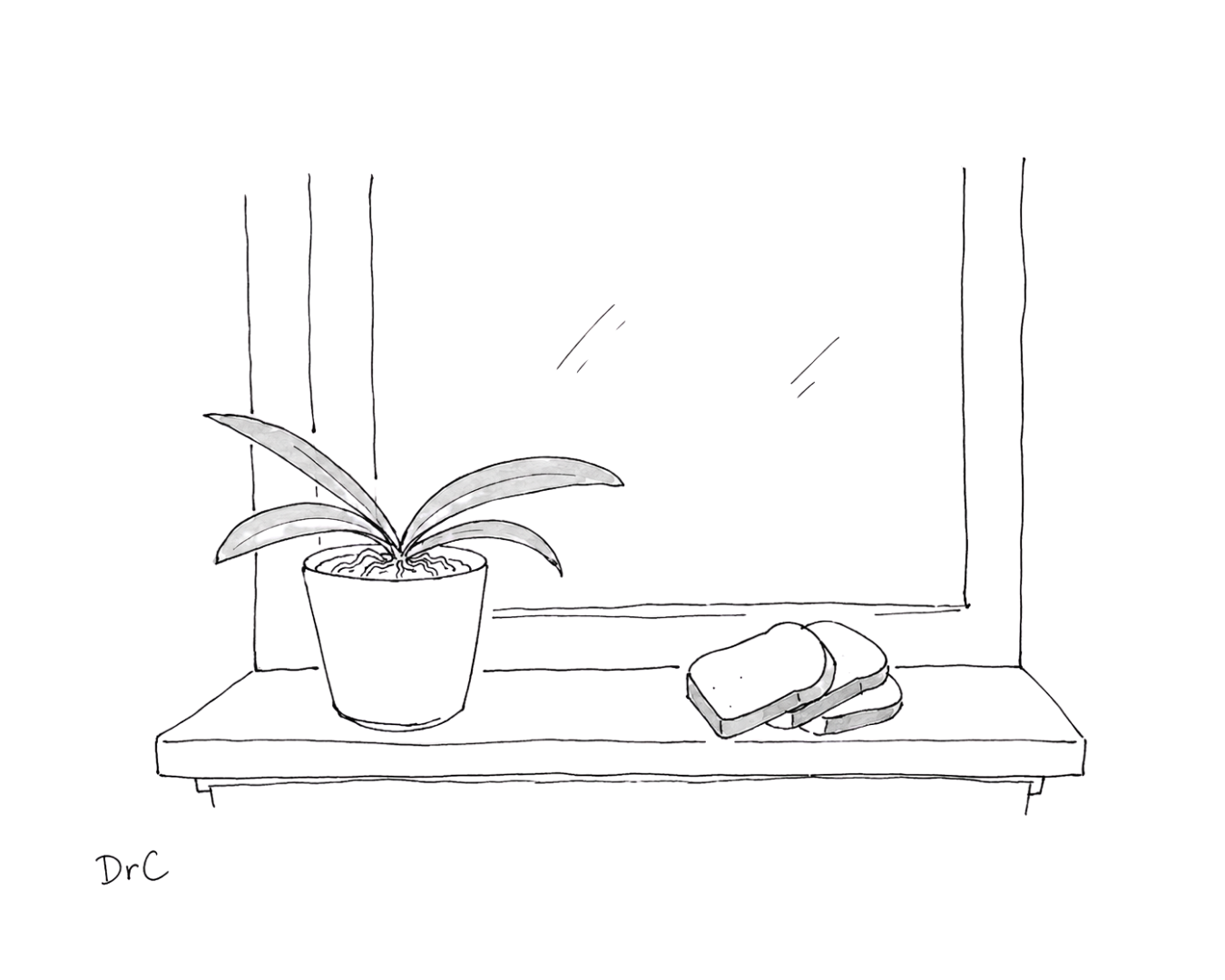
Bread water for orchids
It was late at night and I typed the question because the orchid on the kitchen windowsill has been doing nothing for three months and I had hoped for something completely different when I purchased it. Back at the shop it was sitting in one of those unbelievably ugly default plastic pots blooming gorgeously, and now, in much better (and prettier) conditions it looked like it had COVID. Well, that's what ChatGPT is for, right? Now I have to admit I was hoping for a secret recipe.
I had a reason though - I had just watched a video on You Tube about a guy saving an orchid in distress. He fished it out of a trash bin (he had probably put it there himself before filming, but it doesn't matter - TV magic and all that), cleaned and trimmed what needed cleaning and trimming, and soaked some bread in water to feed to the orchid later... wait, what? The video claimed it was supposed to be like a health potion for the flower.
A few seconds later ChatGPT bestowed upon me a detailed and structured text about light exposure, temperature difference at night, watering frequency adjusted for the bark medium, fertilizer and all that. It also told me to be patient. Oh, and apparently bread water feeds bacteria more than the root and may do more harm than good.
I've carefully read about a third of it and skimmed the rest. Maybe I didn't really want my orchid to bloom that badly after all? Still, if the answer I got was correct, or should I say it felt correct, very much so, why did it seem to be exactly the reason it was so hard to finish reading. I entered the chat hoping for a clean albeit unreal answer, a sentence I could repeat to someone with the satisfaction of a person who knows things. When I got a real one I felt cheated, deprived of my fantasy of being that person.
I contain multitudes
Why do you save those damned bookmarks in your browser for later and then almost never go back to them? How about a neat answer: "Because we mistake collecting for learning." Short and sharp - nice! Why don't you go ahead and repost it, get some likes?
Maybe there's more to it. First, there is a small, honest belief that this video or article or whatever you'd saved for later is worth your attention and that the right hour will arrive. Something that has to do with not willing to deal with loss, even a symbolic one, makes you save the link - that's another valid explanation. Maybe you are curious right now, and you predict (nah - you hope) that future you, a more disciplined you, will share it, which future-you almost never does. To read or not to read - have to decide, right? A bookmark gives you a rain check on yet another decision your life is full of. On top of that we like to keep our options open.
How many is that? I suppose they are not mutually exclusive either, and none of them is "the" reason. Let's coin a term for this, shall we. Manifoldness of the answer? Just joking.
An old argument
The orchid episode is the latest staging of a fight with ourselves that started long ago. I once attended a lecture by a biologist who was on a tour popularizing science, enlightening the audience about fallacies (mistakes in reasoning). I asked why people invent all those complex explanations (often paranormal) when the real one would have been simpler. I thought people are supposed to be intellectually lazy when possible to preserve energy or whatever. Apparently we want the explanation to be rare and dramatic. I do believe now that we subconsciously want the answers to be more entertaining than real. The official term is "narrative bias", because some explanations have the shape of a story. And again - people love stories.
Say a patient is convinced their headaches are a tumour. Let's make this character more developed. A forty-two-year-old man has real headaches and fears there's something awfully wrong. He ignores the surrounding evidence: headaches happen on certain days, there were three nights of five hours of sleep before that, a coffee at six pm, a fight on Sunday and maybe some more stuff going on in his life. Scrupulous doctor takes the case seriously, rules things out, and tells the man to adjust his sleep. What would feel more story-like? Sleep deprivation or a tumour?
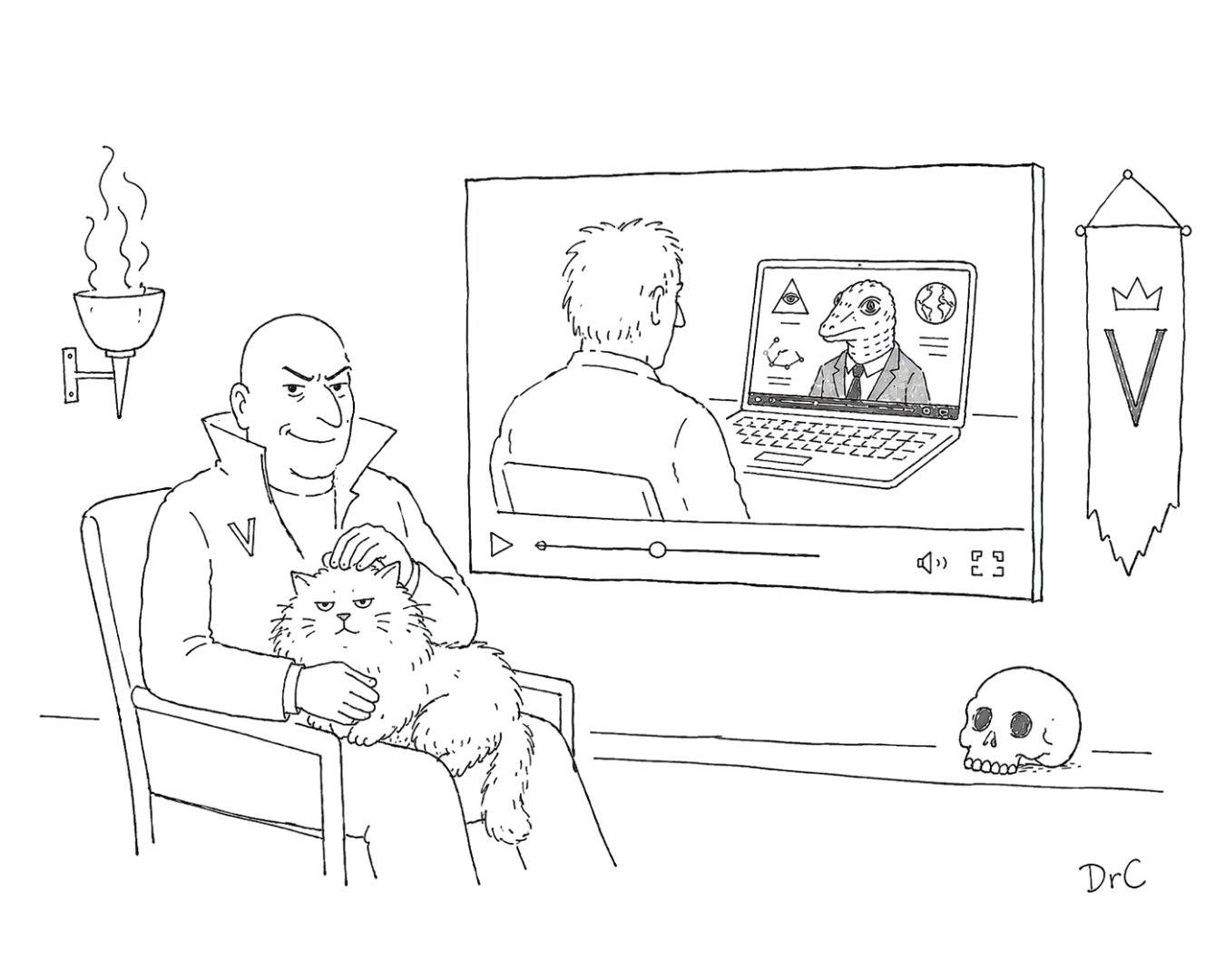
I'm interested in conspiracy theories, not the contents as such, but why they appear. Again, among other reasons of course, each of those theories offers a story, a narrative, worthy of a screenplay. When a government does something that looks deliberate and sinister, Facebook lights up with theories about who benefited and how this was planned for months and maybe let's throw in some lizards shall we. The dull explanation here would be bureaucrats in a hurry missed an internal email, a deputy minister who underestimated the consequences, or banal incompetence. Maybe the bill will be voted against, or reviewed and edited, but we don't consider all this a part of the picture. The competent-malevolence reading is so much more enjoyable than the incompetent-people-are-not-ideal one. I wouldn't be excited to watch a movie about a guy missing an email, but a sinister evil bald guy petting a cat in an evil lair - take my money.
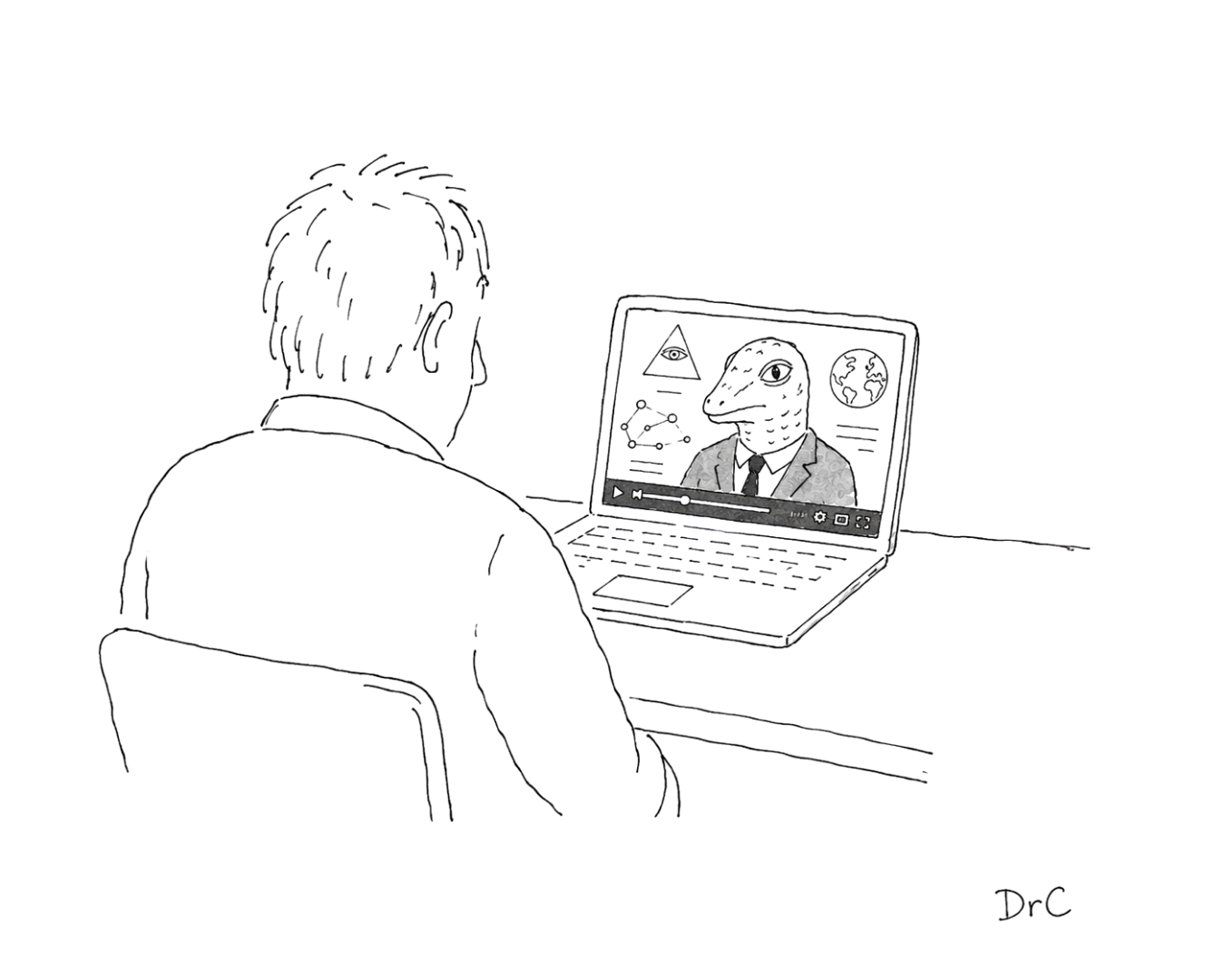
Sometimes avoiding boredom costs us, as in not seeing the real reason relationships go south, or not treating a medical condition the proper way, and sometimes vivid is the point. I can't recall a single elegy that lists six overlapping psychological mechanisms of grief.
My friend called me once to vent about the malevolent boss, and having analysed some supporting details that had initially been left out of the picture, we figured out at least three or four alternative versions. I could hear her chest unclench on the other end of the line, breathing out in disappointed relief. Her initial story was bigger, now she is a person whose boss is simply useless, which is the answer she will have to act on.
Let's enter the kitchen again. The orchid is still doing nothing. I have lowered the watering frequency, moved the pot two feet to the right, accepted the fate of a disappointed plant-owner for the next couple of months. Now, I'm trying to enjoy having done the dull adequate thing. The pleasure of accurate answers is faint, but I'll be okay.
Notice when the answer is correct and you are bored by it, and notice the impulse to find a cooler version. Sometimes the latter version is the right one, but more often than not it is another orchid trick, and you already know how it ends.