Waiting for the anxious other
A mother brings her 12 y.o. boy to a therapist. He is a bad boy, lazy and stupid, and plays video games a lot. Teachers are not happy, no close friends in sight. The mother wants something to happen.
You're the therapist, by the way. You could agree that he is intellectually inhibited, but you don't feel like blaming him for laziness, cause you don't believe in laziness. Also his intellect is not the point here. You talk to the mother and think about the atmosphere they share. Talking to the mother and feeling what she brings to the field matters. That is the air the kid breathes.
There is no father around. No, it is not that bringing children to therapy is what mothers like to do in their free time, while fathers guard the premises. Father is a ghostly figure in this story, even under the spotlight of your questions he remains transparent. "There is no father around," the normalized tragedy of every other family.
Half-alive
The talking part begins, and the boy enjoys it here. He doesn't care about your questions, of course, but you show interest, remain with him for a whole 50 minutes each time you meet, and this amount of attention from an adult feels exciting for him. Recognition is all but absent in his life.
Your office is kinda dull, but the boy feels he is the main character here. And his pastel coloured little kingdom, which your office has turned into is waiting to become alive with fantasies. He doesn't quite know what to do with all these mental riches though.
He finds a piece of paper and starts writing down simple math problems (he is bad at math, but so are you). He hands them to you as an invitation. Is that how he wants to use his free will? Or, does he actually feel not free enough? Or, is this how he imagines the allowed form of aliveness with adults? When the session is over you think about the meaning of this. The adult world must be flooded with problems in his imagination. You could agree with him on that. Still, where does all this maths "fun" in the psychoanalytic field come from?
Few months into boy's therapy, when discussing the case, clinical director drops a remark that you are probably the child's only friend. And to your own deep sadness you realise that is most probably true.
The kid is driven to Life, but he is only half way there, psychically of course. There is something that pulls him back every time he makes one step forward, and you know that even though you meet regularly, and the hope is that therapy is at least some source of alivening, the rest of the week something is "tanatonizing" your efforts. You think about what he experiences at home, a few parent sessions with the mother offer you a glimpse.
His life at home, and at school for that matter, is like a box. The space is limited and the angles are all square. You often see rigidness as over-control and the excess of strict rules, the so-called Super-Ego in its beast form, but here you feel it rather like the lack of spontaneity. There is some routine, but nothing interesting ever really happens, except for the raw life. If the boy does not experience life as something that can be "played with" in his imagination, then his psyche does not develop the right tools for that. Events never become experience, never become dreamable inner material.
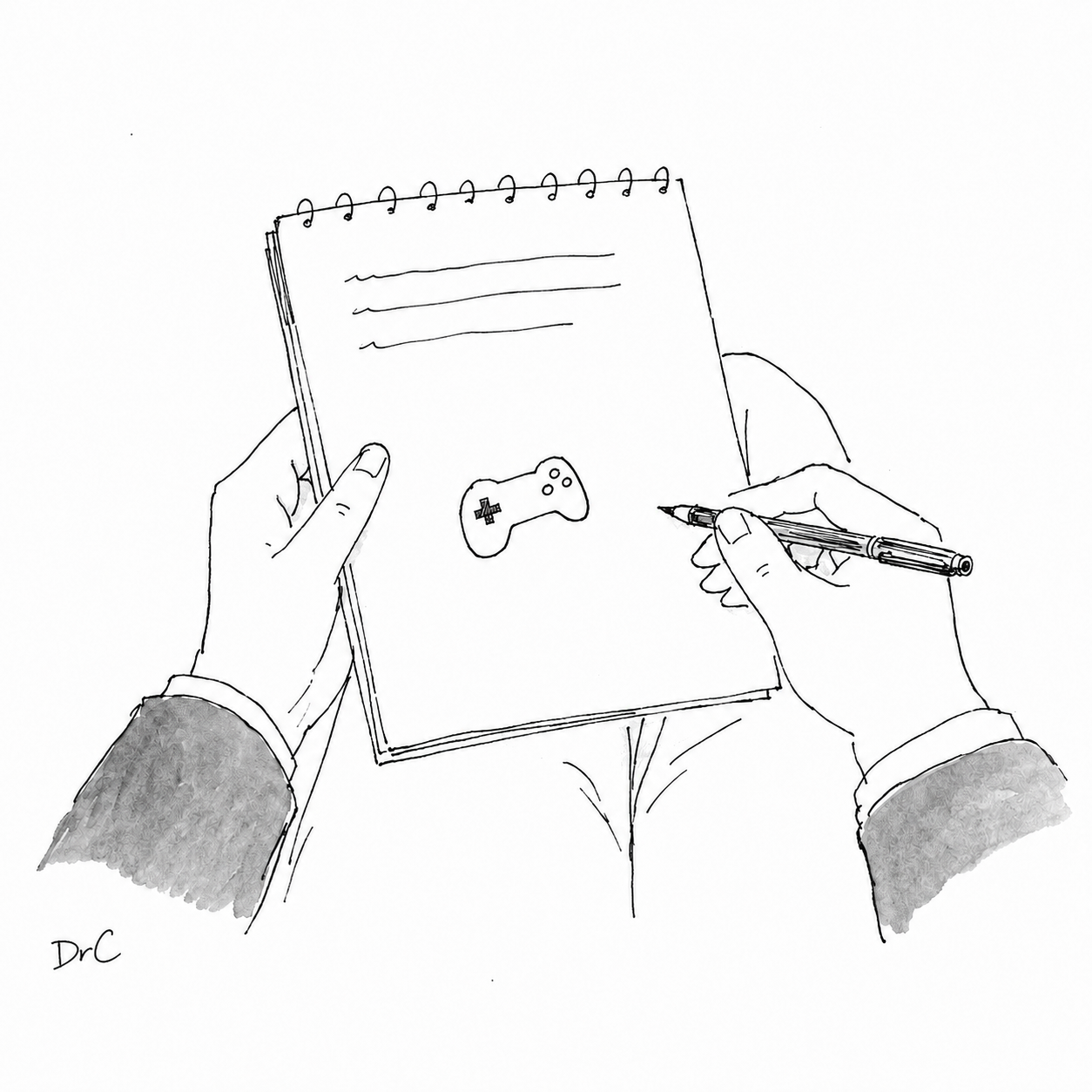
You realise that the "symptom" that irritates the mother so much, namely the boy's passion for video games, is the one thing filled with Life for him: it lets him experience having some success, and a community he readily tells you about. More importantly he starts to fantasize. Identifying with his game character he has cool abilities, he achieves. Other players in the chat room know him in a different way than his classmates. And he Plays.
There is also a curious bargain in place between him and his mother. He once told her that he was good at foreign languages, based on the fact that he is chatting with others while playing online, and declared that he is going to become an interpreter. Being a little kid he is right to imagine that and all other sorts of things, but that image is not supposed to become real. Surprisingly, the mother chooses to take it seriously. But why? What should be his own world of fiction is also her psychological support: the child clings to his omnipotence, she clings to his naivete.
All of this belongs to him, but you remember: it is placed in a virtual world, behind the looking glass of a computer monitor. Oh, and another thing. When he misbehaves, his punishment is restricting screen time.
Now that common parenting idea feels very different, doesn't it?
Living near your interests
Jack grows up in an anxious family. Again, there is no father around, and the mother has to run the family in every way. She's the one to make money, she deals with problems. Evenings, there is no relaxed talk over dinner, always some heaviness in the air. No one in the extended family has hobbies. The only books on the shelves are Christian literature, and reading serves the mother as an anxiety container.
Jack grows intellectually oriented, but the anxiety floating in the air, and the seemingly innocent yet boundary-eroding behaviour of the relatives almost never lets his mind safely fantasize. And safe fantasy is a necessary condition for any intellectual or creative process. The environment is wrong for the kind of person the child is growing to become.
The time passes, and all that Jack has absorbed in his attempts to escape the haunting family patterns (books, movies, education, talks with friends) gives some results, but they are…meh. Studying, reading, talking to feel calm is different from doing all that because of passion and genuine interest.
Later Jack's life circumstances change, of course, but the world is unstable, and stable people don't come his way either; everyone is stressed out in their own way. There is no sense in diving into the things he is interested in cause who cares about a new indie movie when you need to deal with surviving this world.
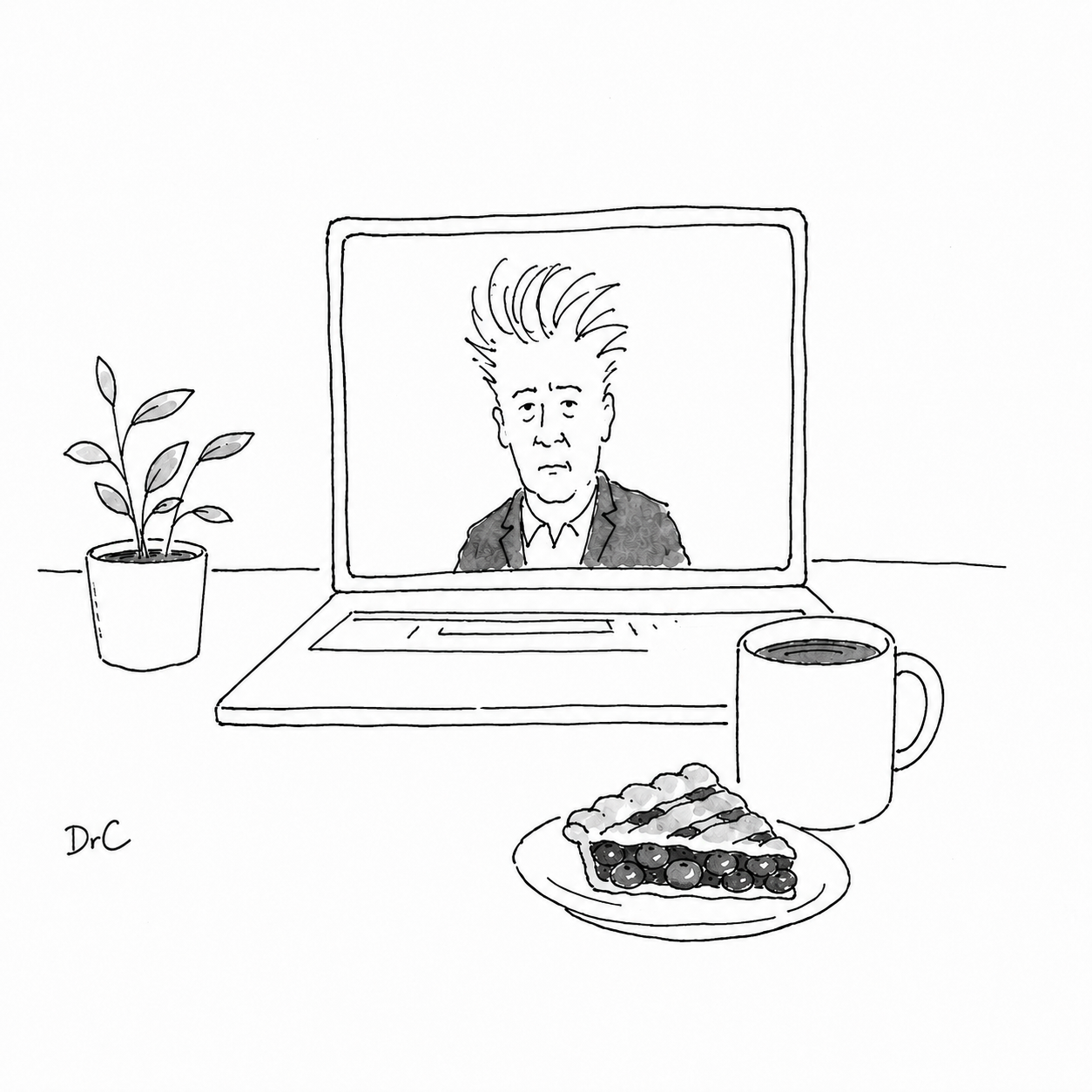
On a Saturday afternoon Jack finally has the time for the indie movie he has wanted to watch for so long. Coffee and snacks ready, the laptop on his knees shows the title. Twenty minutes in, he realises he has not registered a single shot, and the coffee and snacks are gone, though he cannot remember what they tasted like. His mind was on multiple things at once: an email he needs to answer, a looming call from his mother, groceries, laundry, and more. He reminds himself that watching a movie wouldn't hurt any of those, then restarts the film. And then it's the same again.
That must feel depressing — he'd finally, technically, followed the usual advice to make time for the things that matter to him personally. Still, the film plays past him. Idiotic advice.
Permission to waste time
The two boys have different life stories, different backgrounds, but the examples are here alongside each other because they share something, namely a family atmosphere that did not provide enough protected mental space for play and useless thought (I use "useless thought" and "fantasy" as near-synonyms here, as functions of the psyche). A child can grow up observant and intelligent and still have trouble using their mind freely, because a mind preoccupied with vigilance cannot be used for exploration. In that sense, boredom and engagement are best friends, equally opposed to being in anticipation of the anxious other.
Normally, adults' minds function as containers for the child's psychic life. If parents are too busy managing life, that rarely happens. The parent may be admirable, competent, even self-sacrificing, but psychically unavailable in a specific sense. And when a parent cannot protect the child from their own anxiety enough for the child to metabolize experience, the child's psyche often has to become prematurely rigid.
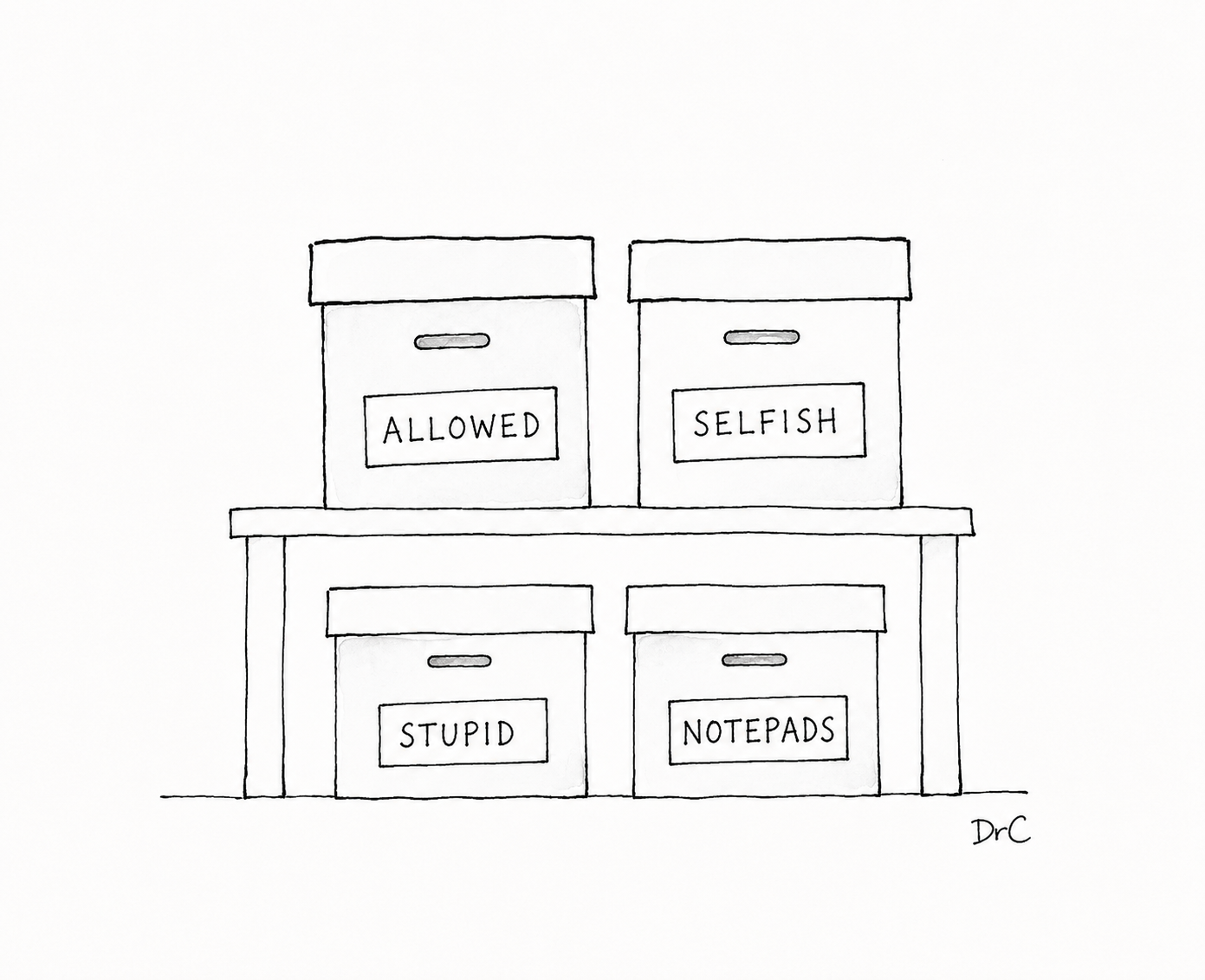
The mind of a person surrounded with ambient anxiety can be imagined as a storage where thoughts are filed under labels like “allowed”, “useful”, “excessive”, “selfish”, “absurd”, “impractical”, “disloyal” and so on. I bet you can imagine how draining that is. So later in life, now an adult, whose mind has been almost constantly preoccupied with emotional emergencies and who never had a chance to believe they were allowed to "waste time" may ask: "I have read things, I know stuff, I have ideas, so why is the result so mediocre?"
Fascination with niche indie films or collecting obscure exonumia can feel ridiculous in such a psychic economy. The usual demand is that whatever you're interested in must answer to the difficulties of reality. Everything else feels like indulgence, or at best a luxury that will be interrupted or criticized anyway, so even the most harmless psychic retreat is under siege.
Living near the interests
If the stable environment never comes, beginning to do something you like in a meaningful way is dangerous because conditions are never safe enough. Then the person lives near their interests, as opposed to living inside them.
"How can you sink into this when practical insecurity is unresolved?", "How dare you have a mind of your own while everyone is carrying bricks?" Just imagine feeling forty shades of guilty for the thing that is your core. "Am I a trembling creature or do I have the right?", right?
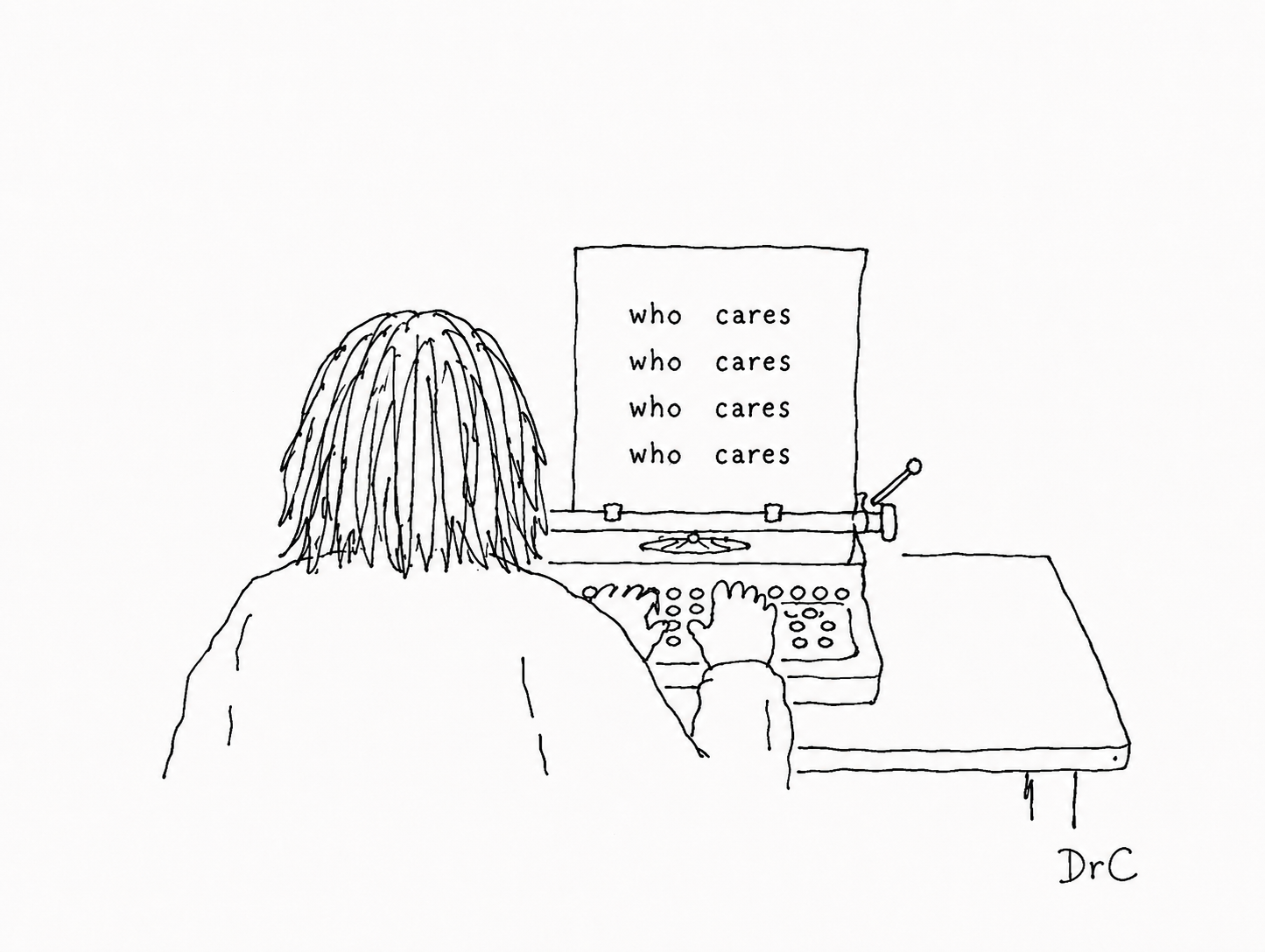
Or the depressive "who cares?" - a defence against desire, a way to kill it, or the guild will come for it anyway. Those voices populate an internalized field saturated with psychical heaviness and "All work and no play", which, famously, makes Jack a dull boy.
A useful analytic question would be: what does such a patient feel would happen if they gave themselves over to their interest? When answering such questions, patients often imagine one scenario or another rooted in their prevalent anxieties. The fantasy might tell them that they will be hated and ultimately left if they let their mind roam freely. "You're not one of us anymore" is a direct expression of the fear of abandonment. If the person does not fully pursue what matters to them, they suffer. If they do pursue it, they feel guilty.
The symptom
Within the analytic frame in place, the video games can be seen as something more than a symptom. If the console is the one territory the paralyzed psyche has been left with, it could be the only space where having capabilities and being recognised by others is possible. We all need to experience achieving something, don't we?
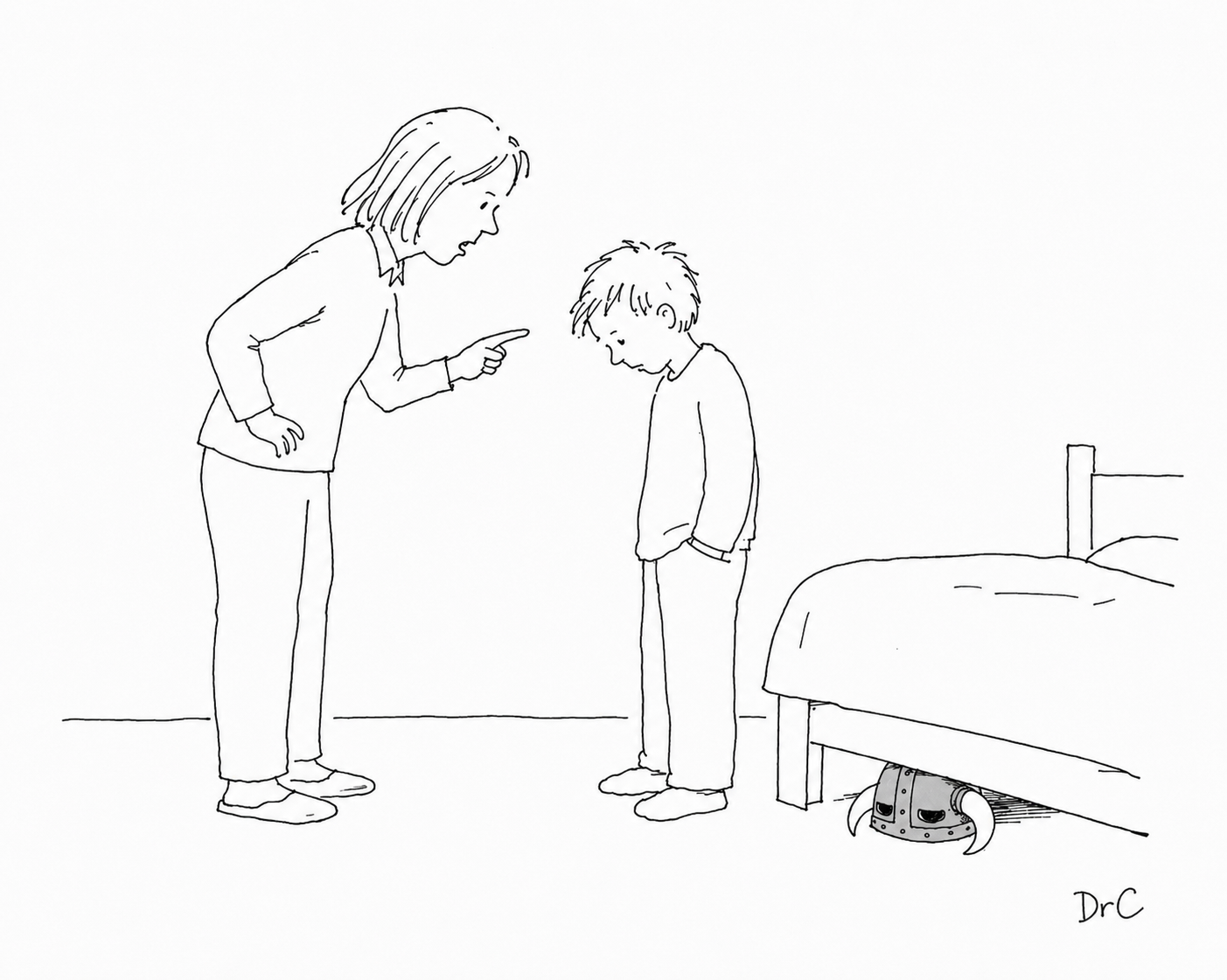
That is the strange shape of it. You can have all the time in the world now and still be afraid to use it, because the anxious other is there the moment you do.